
Reviewed · MEXICO CITY HISTORIC CENTER WALKING TOURS
Must-see Buildings & Palaces of Mexico City
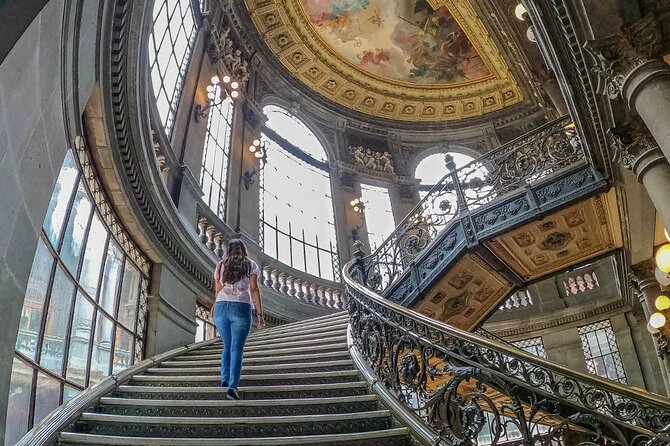
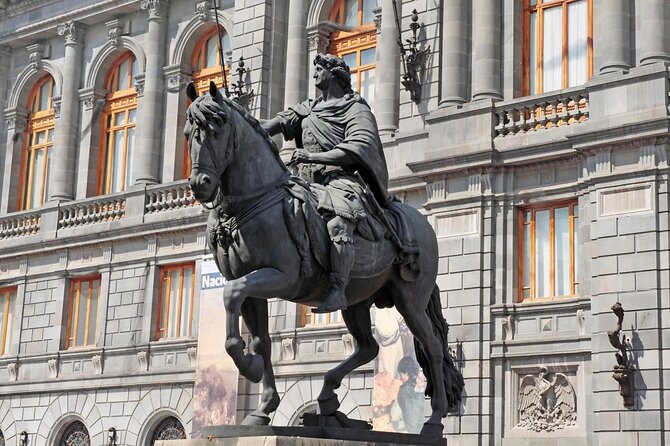
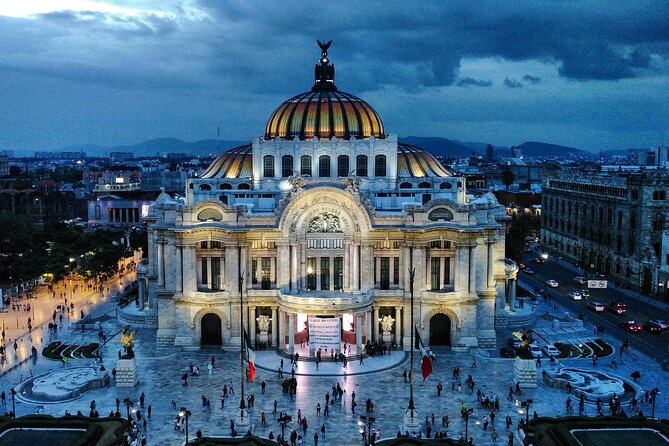
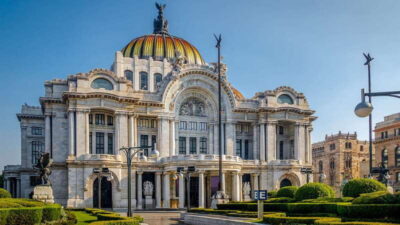
Palacio de Bellas Artes is the real prize here. Its white marble, bronze details, and famous murals give you plenty to look at, but a good guide helps you understand the political and artistic ideas behind the walls. I especially like the chance to compare it with the ornate Palacio Postal and the more formal National Museum of Art.
I also like the small group limit of 15 people and the compact route through central Mexico City. Guides including Yair, Adhara, Leonardo, Ruben, Carlo, and Geovana have been praised for their English, warmth, and command of art and architecture. The main caution is timing: some tours have finished well before four hours, and a bilingual format can leave less time at individual stops.
Key points to know before you book
- Diego Rivera and Siqueiros murals: Palacio de Bellas Artes receives the most detailed attention, especially its politically charged murals.
- Four major buildings in one walk: MUNAL, the Bank of Mexico Museum, Palacio Postal, and Bellas Artes are all in the Centro Histórico.
- Small group format: The tour accepts no more than 15 people, which can make questions easier than on a large coach outing.
- Guide quality matters: Yair, Adhara, Leonardo, Ruben, Carlo, and Geovana have all been praised for strong explanations and friendly, approachable styles.
- Allow for changes: The Bank of Mexico Museum or Alameda Central may be unavailable because of closures, demonstrations, or other circumstances beyond the operator’s control.
- Good value for art lovers: At $49 per person, the tour makes sense if you want context and orientation, not just quick photo stops.
Why Bellas Artes is the heart of the tour
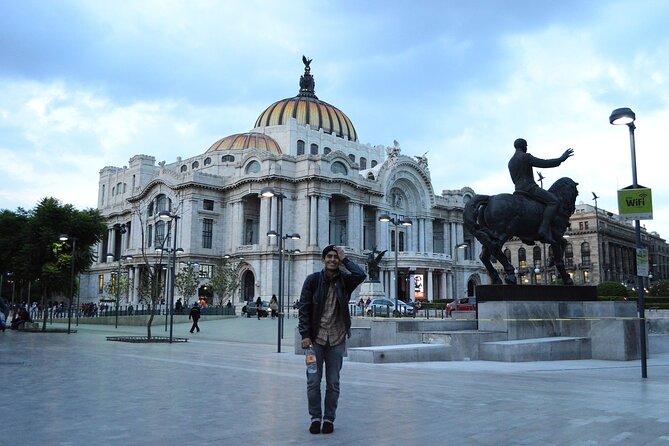
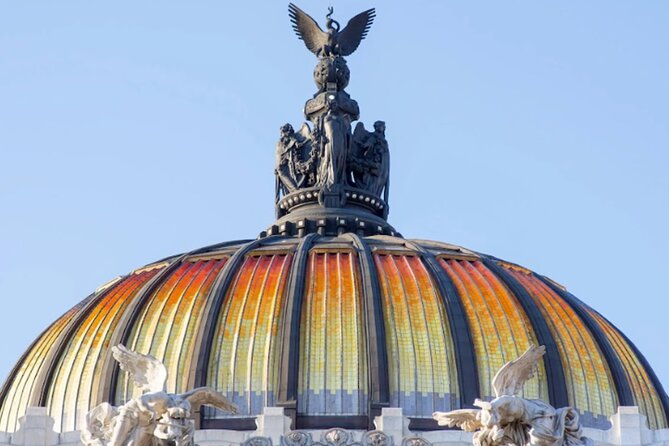
The tour begins at Palacio de Bellas Artes, the city’s most recognizable cultural building. Even before you enter, you get a lesson in Mexico City architecture: white marble, bronze ornament, a grand dome, and a mixture of styles that reflect the building’s long construction history.
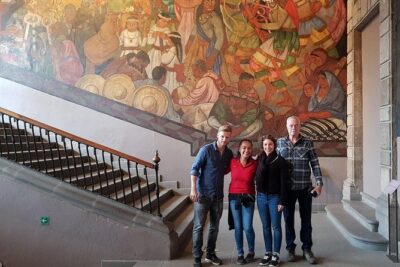
Inside, the murals are the main event. Diego Rivera’s work receives particular attention, along with major pieces by David Alfaro Siqueiros and other Mexican artists. These are not simple decorative panels. They deal with workers, revolution, industry, class, religion, and political power. The images can feel crowded and forceful, so a guide’s explanation helps you sort out what you are seeing.
I would book this tour mainly for the Bellas Artes commentary. Several guides have spent more than an hour explaining the murals, and that longer treatment can be worthwhile if you care about Mexican art. You may hear about controversial works and the arguments behind them, rather than getting only a list of artists and dates.
The tradeoff is clear. If your main interest is seeing all four buildings quickly, an extended Bellas Artes discussion may feel unbalanced. One account found that too much time went to murals and too little to MUNAL. If you prefer to wander independently, you may want to visit Bellas Artes on your own afterward, when you can set your own pace.
More walks through the historic centre:
- Historic Downtown Walking Tour
★ 5.0 · 1,289 reviews - Historic Center Food Tour in Mexico City
★ 5.0 · 1,263 reviews - Mexico City: Historic Downtown Walking Tour
★ 4.8 · 1,039 reviews
MUNAL, Mexico’s art-filled former palace
Museo Nacional de Arte, usually called MUNAL, gives the tour its broadest art range. The collection covers Mexican art from the 16th through the 20th century, so you move across several centuries in a single building.
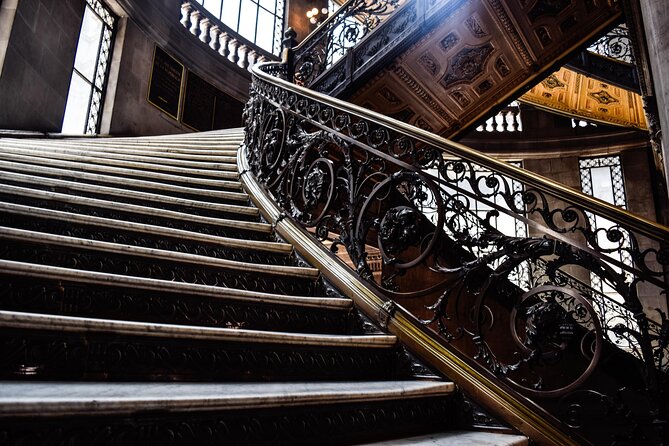
The building itself is part of the appeal. It is a grand former palace with an imposing interior, and the setting helps explain how art, government, wealth, and Spanish colonial influence shaped Mexico’s public spaces. You are not just entering a gallery. You are seeing artwork displayed inside a building designed to make an impression.
A guide can point out key works and help you understand how Mexican art changed over time. That is useful because a large collection can otherwise feel scattered. The best approach is to treat this as an introduction, not a complete survey. You will get a sense of periods and major themes, then you can return later if one section catches your attention.
Time can be tight here. The tour allows about an hour at the museum, but the exact balance depends on the guide and the group. Some participants have felt that MUNAL deserved more attention. If you already know you want an extended museum visit, plan a separate return trip.
There is also a practical warning. MUNAL may be inaccessible for reasons beyond the operator’s control. That can change the route and reduce the value of the day for someone booking mainly for the museum. Ask about current access if MUNAL is your top priority.
The Bank of Mexico Museum and the story of the peso
The Bank of Mexico Museum offers a change of pace. Instead of focusing mainly on paintings and architecture, it explains Mexico’s monetary system and the origin of the peso.
This stop takes you into an older building with its own atmosphere. The subject may sound dry, but money tells you plenty about how a country works. Currency connects government, trade, national identity, and daily life. The museum gives you a chance to see the place associated with the production and history of Mexican currency.
I like this stop because it breaks up the art-heavy route. After murals and historic paintings, the peso museum offers something more practical and civic. It also gives you a better sense of Mexico as a modern nation, not only as a collection of colonial and cultural monuments.
Access is not guaranteed. One tour had to omit the Bank of Mexico Museum because it was closed, and the group was not notified before arriving. A demonstration in the city center has also prevented access to this area and to Alameda Central. If the bank museum is essential to your plans, confirm conditions close to the date.
Palacio Postal, where the post office feels like a royal hall
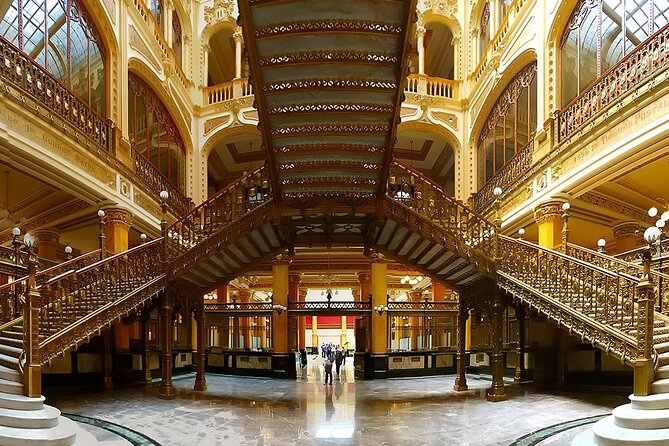
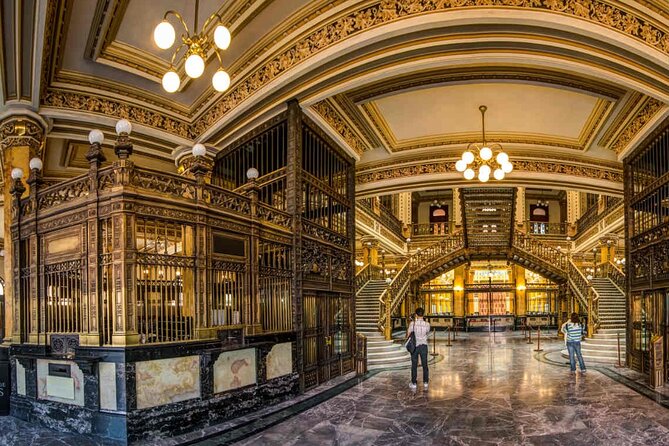
Palacio Postal is one of the most delightful stops for architecture fans. Mexico City’s main post office is far more ornate than you might expect, with imperial decoration and several architectural influences packed into one interior.
The gold-toned details are the feature most likely to catch your eye. The building has the feel of a ceremonial palace rather than a working post office, and walking through it gives you a strong sense of how public buildings once projected national pride.
This is a good place to let your eyes wander. Look at the staircases, metalwork, decorative surfaces, and formal arrangement of the interior. You do not need to be an architecture specialist to enjoy it.
There is one point to clarify before booking. The tour description presents Palacio Postal as a stop, but one account said the group did not enter its interior and had to return independently. Access can vary, so ask your guide at the start exactly what will be included. Seeing the exterior is worthwhile, but it is not the same experience as walking through the gold-plated halls.
A completely different kind of day in Mexico City:
- Teotihuacan, Guadalupe Shrine & Tlatelolco Day Tour with Lunch
★ 5.0 · 11,603 reviews - Xochimilco, Coyoacan and Frida Kahlo with Optional Lunch
★ 4.5 · 7,320 reviews - Balloon flight + Breakfast in cave + Pyramids + Pick up CDMX.
★ 5.0 · 6,335 reviews - Teotihuacan pyramids morning or afternoon without tourist traps
★ 5.0 · 6,186 reviews
Alameda Central, the optional park at the end
The route passes Alameda Central, Mexico City’s oldest park and the oldest park in the Americas according to the tour information. Its design was inspired by the Alameda de Hércules in Seville.
You will see fountains, sculptures, paths, and quieter corners that offer a break from the stone buildings of the historic center. The park is not a full scheduled stop in the same way as the museums and palaces. It is an area you can explore after the guided portion ends.
I would save time for it if the route allows. A short walk through Alameda Central can help you process the tour, and it gives you a little open space after several indoor visits. But do not count on it as a guaranteed part of the program. A demonstration has caused the park to be skipped, and some tours have ended before this portion.
How the four-hour schedule really works
The advertised duration is about four hours, with roughly one hour assigned to each principal stop. That sounds generous, but the actual rhythm can change.
The route is made up of compact central-city sights, so walking between buildings should be manageable for most people. You are near public transportation, and the start is at Palacio de Bellas Artes on Avenida Juárez. The listed end point is the Banco de México building on Avenida 5 de Mayo.
The order may not always feel perfectly balanced. Bellas Artes can take much longer if the guide gives the murals the attention they deserve. MUNAL may then receive a shorter introduction, while the bank museum or Alameda may be affected by opening conditions or street activity.
Some participants have finished in less than three hours. That is an important point if you are building a full day around the tour. I would keep a flexible afternoon rather than scheduling a timed attraction immediately afterward.
The bilingual format also matters. Although the experience is offered in English, some departures have included explanations in both English and Spanish. That can be useful for mixed-language groups, but it slows the pace. If you want long, detailed explanations at every stop, ask whether your departure will be English-only.
The guide can make or break the experience
This is a guide-led art and architecture walk, not simply an admissions package. Your experience will depend heavily on who leads it and how the group is handled.
Yair has been praised for being thorough, approachable, and easy to question. Adhara has received especially strong praise for connecting architecture, art, and Mexican culture, with detailed explanations of Rivera and Siqueiros. Leonardo has been noted for making a large amount of information easy to absorb in a short time.
Other praised guides include Ruben, Carlo, and Geovana, who is also known as Gio. Geovana’s English and local knowledge have been highlighted, while Carlo’s enthusiasm for Mexico City’s buildings has been appreciated. These names are useful to know, but you cannot choose a specific guide from the information provided.
A guide may also add small personal touches. One guide extended the walk through downtown, pointed out colonial buildings, and offered a local candy. That sort of extra attention can make a scheduled tour feel less mechanical.
Still, the operation has had weak moments. Some people have struggled to find the guide at the large Bellas Artes meeting area. The company flag may be small and hard to spot, and the guide may not be visibly waving it. Arrive early, keep the guide’s name available, and call the operator if you cannot locate the group.
Is $49 a fair price?
At $49 per person, the price is reasonable if the tour delivers close to the advertised four hours and includes the planned admissions. You are paying for access, a route through several important buildings, and, most of all, interpretation.
The value is strongest for a first visit to Mexico City. A guide can help you understand why Bellas Artes matters, identify the major muralists, and connect the city’s architecture with political and cultural change. That saves you from moving through impressive rooms without knowing what deserves your attention.
The value drops if the tour is shortened or if major stops are closed. It also drops for independent museum visitors who already know the art and prefer to spend two hours in one collection rather than one hour in several places.
Group discounts may be available, and the group is limited to 15 people. That is a useful size for asking questions, though it is not a private tour unless you book one separately. The experience is offered in English and comes with a mobile ticket.
Cancellation is flexible up to 24 hours before the start time for a full refund. Changes or cancellations made inside that window are not refunded, so keep the local cut-off time in mind.
Who should book this Mexico City walk?
I would recommend it to a first-time visitor who wants an introduction to Centro Histórico without arranging separate museum entries and guides. It suits people who enjoy art, architecture, and political context, especially those who want help reading Mexican murals.
It is also a good choice for a solo visitor who wants company and a clear route through the center. The small group limit can make a difference, and the guides have often been praised for answering questions in a friendly way.
Families can enjoy it, but the length of the art explanations may test younger children. If your group has mixed interests, Palacio Postal and the Bank of Mexico Museum provide useful variety, while Bellas Artes supplies the strongest visual payoff.
I would hesitate if you need a guaranteed visit to every listed building, want a strict four-hour schedule, or prefer to explore museums at your own speed. Closures, demonstrations, bilingual commentary, and guide pacing can all change the balance.
Should you book Must-see Buildings & Palaces of Mexico City?
Book it if you want a guided introduction to Mexico City’s grand central buildings and care about understanding the murals, not just photographing them. At $49, it offers solid value when MUNAL, the Bank of Mexico Museum, Palacio Postal, and Bellas Artes are all open and the tour runs close to four hours.
Before paying, confirm the meeting details, ask which buildings are expected to be open, and allow extra time in case the route ends early. If Bellas Artes and its Rivera and Siqueiros murals are your priority, this is a strong choice. If you mainly want uninterrupted museum time, plan to return independently after the tour.
FAQ
How long does the tour last?
The tour is listed as approximately four hours. The actual length can be shorter if a museum is closed, access changes, or the guide moves quickly.
Where does the tour begin?
The meeting point is at Palacio de Bellas Artes, on Avenida Juárez in Mexico City’s Centro Histórico.
Where does the tour end?
The listed end point is Banco de México Fabrica de Billetes at Avenida 5 de Mayo 2 in the Centro Histórico.
What buildings and museums are included?
The planned stops are Museo Nacional de Arte, Museo Banco de México, Palacio Postal, and Palacio de Bellas Artes. The route also passes Alameda Central, which you may visit after the tour.
Is admission included?
Admission tickets are included for the listed museum and palace stops, subject to access and circumstances that may prevent a location from opening.
Is the tour offered in English?
Yes. The experience is offered in English. Some departures may include bilingual explanations, which can make the tour take longer.
How large is the group?
The maximum group size is 15 people. Most people can participate, and the route is near public transportation.
Just added around Mexico City
- Xochimilco’s Wild Side: Mezcal, Insects & Culture★ 4.9 · 10 reviews
- Xochimilco: Food and Trajinera Ride with Local Women★ 5.0 · 5 reviews
- Xochimilco: Island of the Dolls Tour Games and Drinks★ 5.0 · 25 reviews
- Xochimilco Ecological Tour – Away From the Crowds (3 Hours)★ 5.0 · 15 reviews
- Xochimilco + Coyoacán Combo Full-Day Tour★ 5.0 · 3 reviews
- Xochimilco floating gardens, Coyoacan and UNAM murals★ 4.0 · 6 reviews
- Xochimilco: amanecer en kayak Ciudad de México★ 5.0 · 35 reviews
- Xochimilco: Eco Tour With Food★ 4.8 · 7 reviews
Mexico City Historic Center Walking Tours, compared.




Walking Tour – Impressive murals in Historical Center of Mexico City
Read our review →
Muralist Art Semi Private Walking Tour in Mexico City Downtown
Read our review →Browse the lists this tour appears in