
Reviewed · FOOD & DRINK
Learn How To Cook Mexican Food
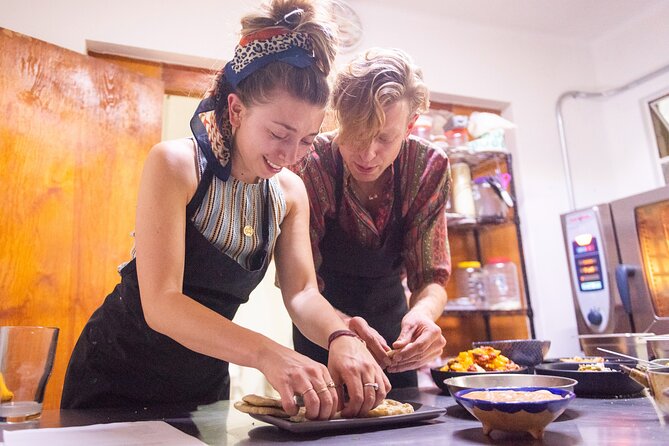
The best part of this Mexico City cooking class is that you do not simply watch a chef prepare a polished meal. You work with corn masa, chiles, and cactus, learning the basic kitchen skills that shape everyday Mexican food. Chef Julieta Carrion teaches in her working kitchen in Roma Norte, with no more than eight people at the counter.
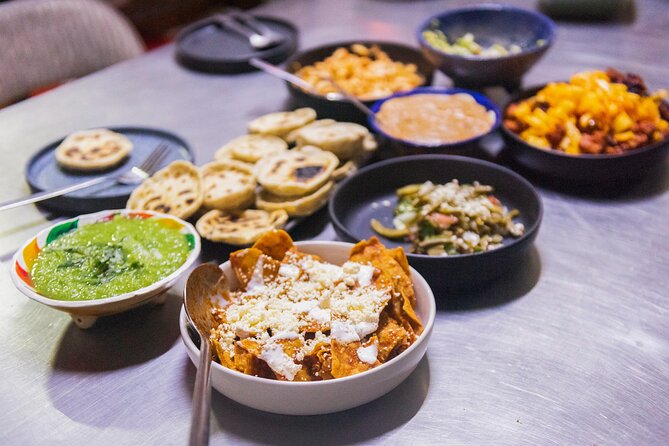
I like the small class size, which gives you room to ask questions and use your hands without waiting through a long line of classmates. I also like the generous meal at the end: you prepare sopes, nopales salad, tinga, papas con chorizo, and red chilaquiles, then eat as much as you want and take leftovers in provided containers.
The main drawback is the fixed 6:00 pm start and the three-hour commitment. This is an evening food class, not a quick market stop, and the $149.28 price is a serious part of your Mexico City budget. Still, the recipes and practical skills make it more useful than a meal you simply forget after the last bite.
Key Points at a Glance
- Work in a real Roma Norte kitchen: Chef Julieta teaches in the same professional kitchen used for her pastry business.
- Learn hands-on Mexican basics: Practice green salsa, red salsa, fresh and dried chiles, corn masa, and nopales.
- Eat a full cooked meal: Your menu includes sopes, cactus salad, tinga, potatoes with chorizo, and chilaquiles rojos.
- Keep the class personal: The maximum group size is eight people.
- Take the lesson home: Written recipes and any unfinished food in supplied containers are included.
- Choose a vegetarian main course: Oyster mushrooms can replace chicken in the tinga.
Inside Chef Julieta’s Roma Norte Kitchen
This class takes place at Tonalá 194 in Roma Norte, an easy-to-reach part of Mexico City near public transportation. You return to the same meeting point when the evening ends, so the plan is simple: arrive for the 6:00 pm start, cook for roughly three hours, and finish with dinner.
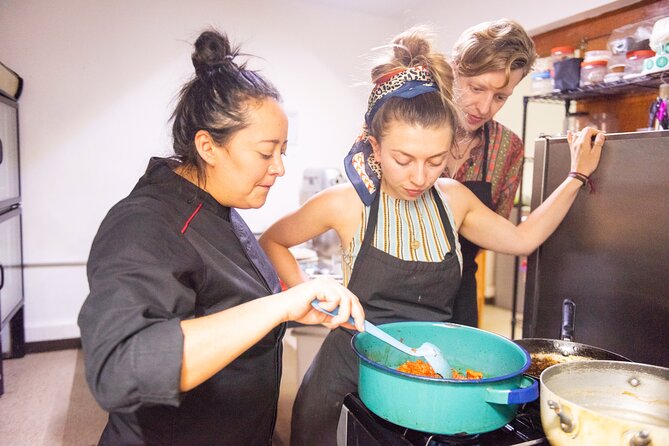
The setting matters. Chef Julieta owns a pastry business that supplies restaurants and coffee shops, and she teaches these classes in that same professional kitchen. You are not being led into a staged demonstration room built only for tourists. You are entering a working food business, where the kitchen has a practical purpose beyond the class.
An apron is provided for each person. Ingredients are included, and the small group limit keeps the session from feeling like a lecture. With up to eight people, you should have a reasonable chance to handle ingredients, shape dough, and follow each step at close range.
The exact rhythm depends on the group, but the class is designed to move at an enjoyable pace. That is useful for beginners. Mexican cooking can look simple on a plate while hiding plenty of small techniques, and rushing through them would defeat the point.
More food tours in Mexico City:
- Historic Center Food Tour in Mexico City
★ 5.0 · 1,263 reviews - Polanco Food Tour: The Bestselling Food Adventure in Mexico City
★ 5.0 · 881 reviews - Colonia Roma Food Tour
★ 5.0 · 838 reviews
The First Skills: Salsa, Chiles, and Masa
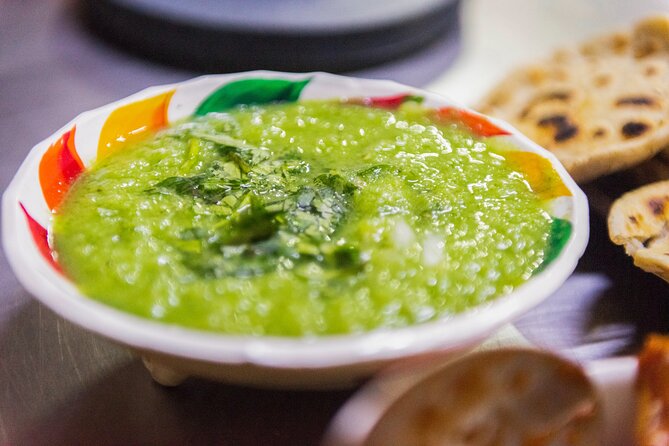
The lesson focuses on methods rather than a pile of recipes. You learn how to make a basic green salsa, work with fresh and dried chiles, and understand how different ingredients build flavor and heat.
That practical focus is one of the strongest reasons to book. Once you know how to work with salsa and chiles, you can use the same ideas well beyond this particular menu. You are learning a foundation for Mexican cooking, not only how to copy one dinner.
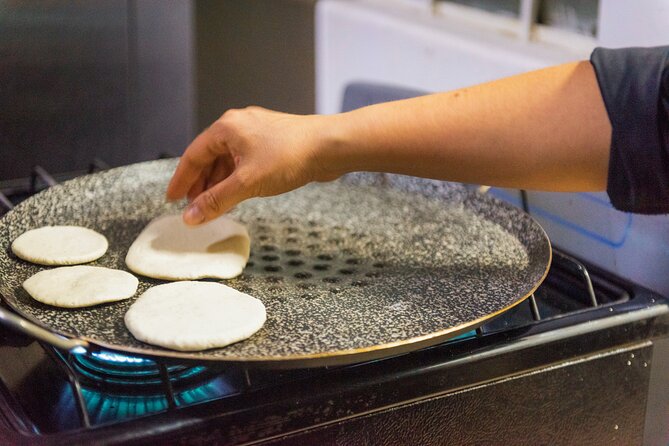
Corn masa is another central lesson. You handle nixtamalized corn dough and shape it with your hands. This gives you a feel for the texture that a written recipe cannot quite provide. If you have never worked with masa, the hands-on practice is likely to be the most memorable part of the evening.
The class also covers nopales, or cactus paddles. Nopales are a staple of Mexican cooking and appear here as a fresh salad. You learn how this familiar ingredient fits into a home-style meal rather than seeing it only as an unusual item on a restaurant menu.
The goal is confidence. You should leave knowing what to do with masa, how to approach chiles, and how to prepare several dishes without treating Mexican food as a mystery reserved for specialists.
Making Sopes From Nixtamalized Corn
The first starter is sopes, small round patties made from nixtamalized corn dough. You top them with refried beans, salsa, onion, and cilantro if you like.
Sopes are a good teaching dish because they bring several skills together. You shape the masa, cook the corn base, and then build the finished bite with beans and toppings. The dish is modest, but it shows how Mexican food often depends on layering simple ingredients rather than hiding them under heavy seasoning.
Pay attention to the texture of the dough. That is the sort of detail you can use when you make masa dishes back home. Written recipes tell you quantities, but your hands tell you if the dough feels workable.
The toppings also let you adjust the result to your taste. Onion and cilantro are optional, and the salsa gives you control over heat. This is a useful reminder that Mexican food is not automatically fiery. The level of spice can be adjusted to suit the cook and the table.
Nopales Salad, Fresh and Practical
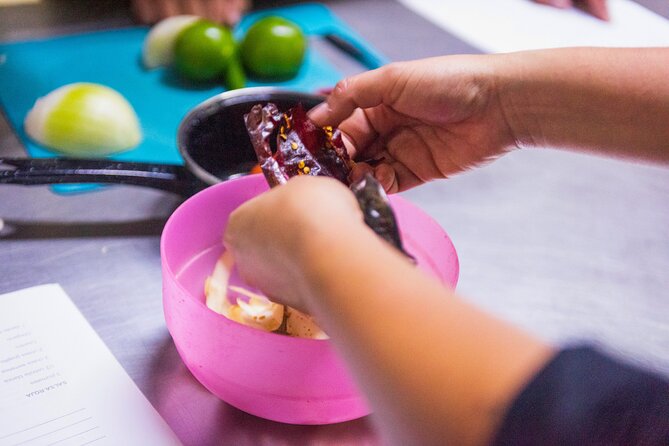
Next comes the nopales salad. Cactus is a staple of the Mexican diet, and this dish gives you a direct introduction to a food that may be unfamiliar in your home kitchen.
The salad is described as fresh and healthful, but the bigger benefit is practical. You learn how to include nopales in a meal without making the ingredient feel like a novelty. It becomes one part of a balanced spread, alongside corn, beans, meat or mushrooms, potatoes, and salsa.
If you are curious about regional ingredients, this is one of the more valuable parts of the class. A restaurant can serve you cactus, but preparing it yourself gives you a better sense of its place in everyday cooking.
A completely different kind of day in Mexico City:
- Teotihuacan, Guadalupe Shrine & Tlatelolco Day Tour with Lunch
★ 5.0 · 11,603 reviews - Xochimilco, Coyoacan and Frida Kahlo with Optional Lunch
★ 4.5 · 7,320 reviews - Balloon flight + Breakfast in cave + Pyramids + Pick up CDMX.
★ 5.0 · 6,335 reviews - Teotihuacan pyramids morning or afternoon without tourist traps
★ 5.0 · 6,186 reviews
Tinga With Chicken or Oyster Mushrooms
The main course includes tinga, made with chicken seasoned with smoked chipotles. You can choose the heat level, so you are not locked into a punishingly spicy dish.
Smoked chipotle brings more than heat. It gives the tinga a smoky flavor that helps explain why dried and smoked chiles matter so much in Mexican cooking. The class gives you a chance to see how a chile can shape the character of a dish instead of functioning only as a source of fire.
Vegetarians can have oyster mushrooms instead of chicken. That is a meaningful option because the dish keeps its chile-based character rather than forcing you into a separate menu. The information provided does not specify other dietary substitutions, so you should ask about any additional needs before booking.
Tinga is also a useful home recipe. It is flavorful enough for a main meal, but the basic idea can be adapted to the ingredients you find later. The written recipe helps, yet the in-class seasoning lesson is likely to matter just as much.
Papas con Chorizo and Chilaquiles Rojos
Papas con chorizo brings potatoes and mildly spiced sausage to the table. Compared with the tinga, this dish offers a gentler, familiar flavor profile. The chorizo adds seasoning to the potatoes, creating the kind of filling food that works well as part of a larger family-style spread.
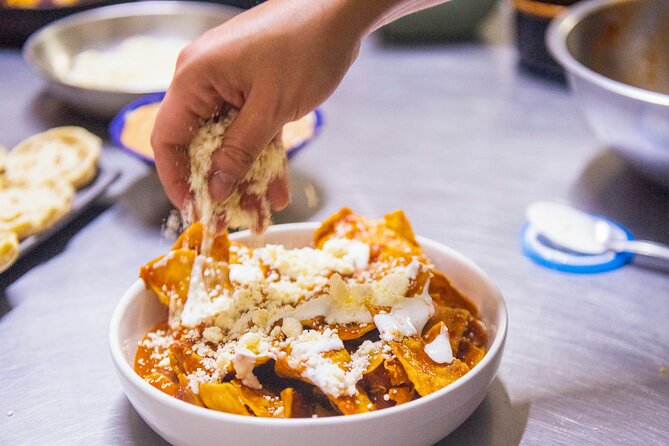
The menu then moves to chilaquiles rojos, crunchy tortilla chips dipped in red salsa and topped with fresh, thick crema. This is a dish where timing and texture count. The chips should meet the salsa without losing all of their character, and the crema adds a cool contrast to the red sauce.
Together, these dishes make the meal feel generous. You are not preparing one small plate and calling it dinner. You work through several styles of Mexican food, from hand-shaped masa to cactus salad, smoky tinga, sausage and potatoes, and sauced tortilla chips.
Everything you cook is for you to eat after the class. If you cannot finish it, containers are provided so you can take the leftovers with you. That helps justify the evening format and keeps the price from feeling like you paid only for a demonstration.
Why the Small Group Size Matters
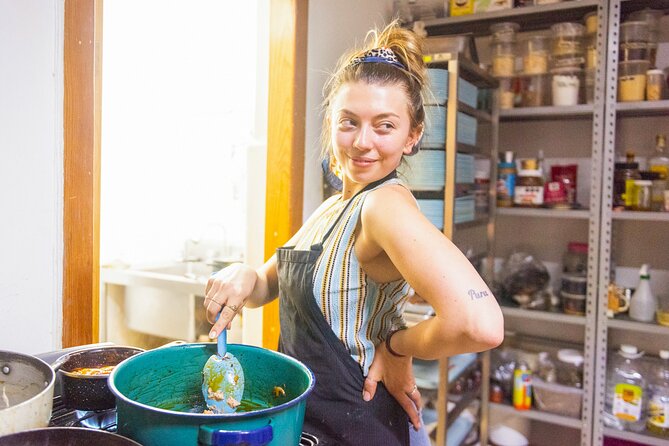
A maximum of eight participants is a real advantage here. Cooking requires space, and a crowded class can turn a hands-on lesson into a series of brief turns at a shared work surface.
With eight or fewer people, you should have more direct access to the ingredients and the chef. You can ask how much chile to use, check the feel of the masa, or clarify a step before moving on. The class is still shared, so it is not private instruction, but it should feel more personal than a large food workshop.
The class is offered in English. That removes a major language barrier for English-speaking visitors, especially when the lesson involves texture, technique, and questions about spice. Chef Julieta is described as professional, engaging, and friendly, qualities that matter in a setting where you are learning by doing.
The small group also suits people who want a social evening without signing up for a large organized event. You share a meal and a kitchen, but the class remains limited in size.
Is $149.28 a Fair Price?
At $149.28 per person, this is not a bargain meal. You should book it because you want the instruction and the chance to cook, not because you are seeking the cheapest dinner in Roma Norte.
The price includes all ingredients, an apron, the cooking session, the food you prepare, written recipes, and containers for leftovers. That makes the value easier to see. You receive both an evening meal and a set of skills you can use after Mexico City.
The three-hour length also gives the price some weight. A short demonstration would be harder to justify, while this class gives you time to work through several dishes and techniques. The exact amount of hands-on time for each participant will depend on the group, but the eight-person limit is reassuring.
I would consider it a good use of money for a food-focused visitor, a beginner cook, or anyone who wants a cultural activity with a practical result. It is less suitable if you already know Mexican cooking well or simply want to taste local food without spending an evening in a kitchen.
Timing, Location, and What to Bring
The class begins at 6:00 pm and lasts about three hours. Plan for your evening to end around 9:00 pm, with some flexibility because cooking and eating rarely follow a stopwatch.
The meeting point is Tonalá 194 in Roma Norte, Cuauhtémoc, Mexico City. It is near public transportation, and the activity finishes back at the meeting point. Private transportation is not included, so you need to arrange your own way to and from the kitchen.
Bring an appetite and wear clothing you do not mind using around food. An apron is provided, so you do not need to pack one. The booking comes with a mobile ticket, and confirmation is received at the time of booking.
The experience is offered in English. The group can include up to eight people, and the class requires a minimum number to operate. If that minimum is not met and the session is canceled, you are offered another date or experience, or a full refund.
Free cancellation is available until 24 hours before the start time. Canceling or changing the booking less than 24 hours ahead does not qualify for a refund, so keep the local cutoff time in mind.
Who Will Get the Most From This Class?
I would recommend this class to you if food is one of the main reasons you came to Mexico City. It gives you a meal, a practical lesson, and a better understanding of ingredients you may encounter in markets and restaurants during the rest of your stay.
It also suits beginners. You do not need to arrive with advanced cooking skills. The menu introduces basic techniques at a measured pace, and the recipes give you a reference for later.
Vegetarians have a clear main-course alternative with oyster mushroom tinga. The supplied information does not confirm a full range of dietary accommodations, so you should contact the provider if you have allergies or other restrictions.
This is less ideal for someone seeking a quick activity between sightseeing stops. The fixed evening start, three-hour duration, and full menu require a real time commitment. It is also not the right choice if you prefer watching a chef rather than handling food yourself.
Should You Book It?
Book this experience if you want to understand Mexican food from the kitchen outward. The strongest features are the eight-person limit, the working Roma Norte kitchen, and the focus on basic skills such as salsa, chiles, masa, and nopales.
The $149.28 price is high for dinner alone, but more reasonable when you count the ingredients, instruction, recipes, substantial meal, and leftovers. I would especially choose it early in a Mexico City stay, since the lessons may help you recognize and appreciate similar ingredients during the rest of your visit.
Skip it if your schedule cannot spare a full evening or if you are looking only for a low-cost meal. For everyone else, this is a useful, friendly way to cook traditional dishes with Chef Julieta Carrion and leave with something more lasting than a full stomach.
FAQ
Where does the cooking class take place?
The class takes place at Tonalá 194, Roma Norte, Cuauhtémoc, Mexico City, Mexico.
What time does the class start?
The class starts at 6:00 pm.
How long does the experience last?
The cooking class lasts approximately three hours.
Is transportation included?
No. Private transportation is not included. The meeting point is near public transportation, and the class ends back at the same location.
How many people can join the class?
The class has a maximum of eight participants.
Is the class offered in English?
Yes. The experience is offered in English.
What food will I prepare?
The menu includes sopes, nopales salad, tinga, papas con chorizo, and chilaquiles rojos.
Is there a vegetarian option?
Yes. Oyster mushrooms can replace chicken in the tinga.
Can I take food home?
Yes. Everything you cook is for you to eat, and containers are provided for any food you do not finish.
What is included in the price?
The price includes the cooking class, all ingredients, an apron for each participant, the food you prepare, and written recipes.
Can I cancel for a full refund?
Yes, if you cancel at least 24 hours before the experience start time. Cancellations or changes made less than 24 hours before the start time are not refunded or accepted.
Just added around Mexico City
- Xochimilco’s Wild Side: Mezcal, Insects & Culture★ 4.9 · 10 reviews
- Xochimilco: Food and Trajinera Ride with Local Women★ 5.0 · 5 reviews
- Xochimilco: Island of the Dolls Tour Games and Drinks★ 5.0 · 25 reviews
- Xochimilco Ecological Tour – Away From the Crowds (3 Hours)★ 5.0 · 15 reviews
- Xochimilco + Coyoacán Combo Full-Day Tour★ 5.0 · 3 reviews
- Xochimilco floating gardens, Coyoacan and UNAM murals★ 4.0 · 6 reviews
- Val´quirico And The City of Angels Puebla From Mexico City★ 5.0 · 3 reviews
- Xochimilco: amanecer en kayak Ciudad de México★ 5.0 · 35 reviews
Food & Drink, compared.
Lucha Libre Tickets & Tacos & Beer & Mezcal – BEST NIGHT EVER!
Read our review →
Mexico City Historical Centre Food Tour with 7 Authentic Tastings
Read our review →
Mexico City Boat Tour Food and Unlimited Drinks Priority Boarding
Read our review →
Lucha Libre Tour and Mezcal Tasting in Mexico City
Read our review →
Mexican Cooking Class with Food Market Visit in Mexico City
Read our review →
Browse the lists this tour appears in